Give me the problem that has no shape yet.
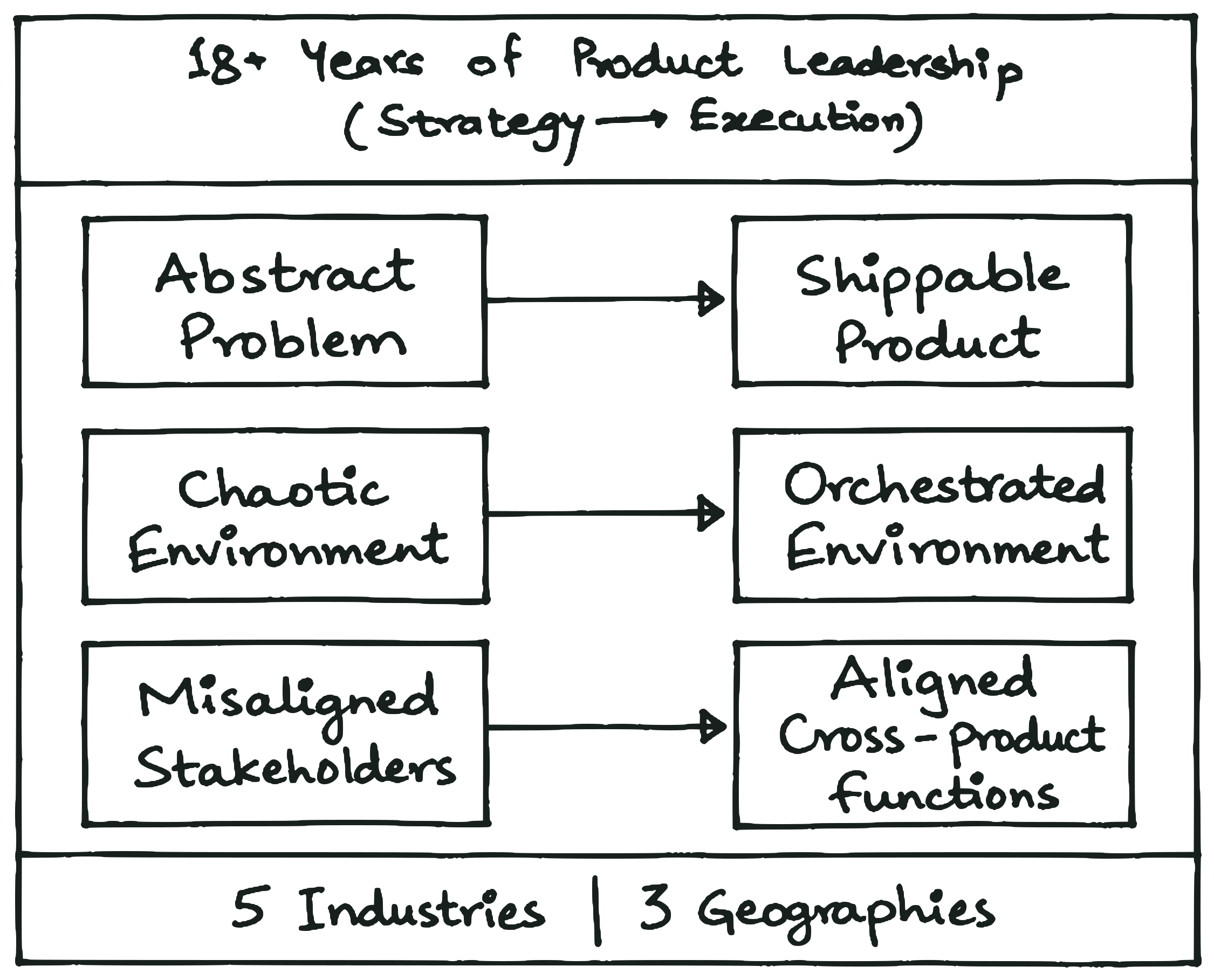
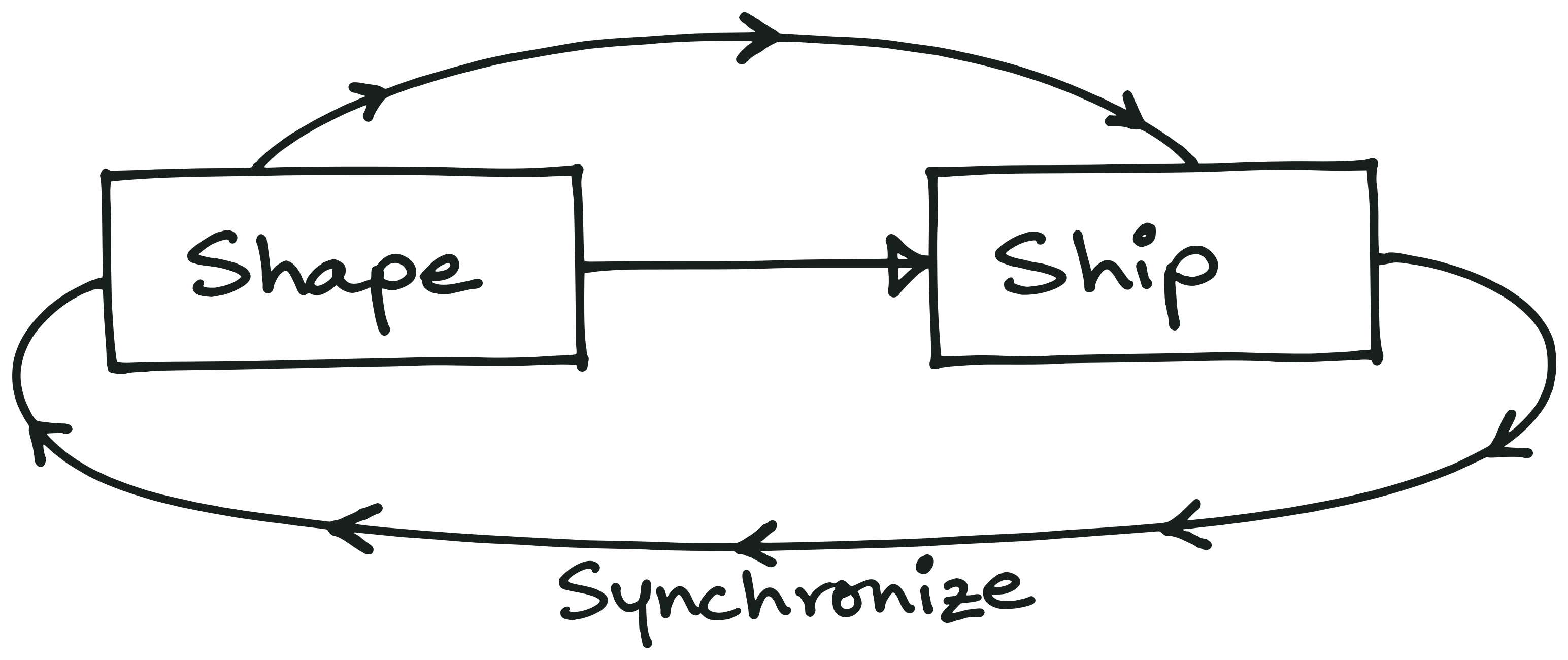
Organisations don’t fail at strategy. They fail at translating it into work.
Faster than a hire can ramp.

Transformation rarely breaks on the strategy. It breaks in translating and executing it.
Most PM training teaches what to deliver.
Swanubhava™ trains how you behave when it gets hard.
A product management behavioural model. It trains how a PM handles the human side of the role - the room, the pressure, the stakeholder - through simulated scenarios, scored against 8 behavioural anchors in three pillars, inspired by the ICF Core Competencies.
Product Management: from my perspective
Tell me the problem. I’ll tell you honestly if I’m the right fit.
0→1 strategy | Product-to-platform thinking | VP-level judgement, without a full-time hire | Discovery and framing | Go-to-market strategy | AI product advisory
Three postures and eight anchors: how you hold yourself, set up the relationship, and keep it alive.
Each posture has behavioural anchors, and each anchor breaks into ground-level behaviours, trained as scenarios. Tap an anchor to hear what it sounds like.
Behaviours overlap by design - real situations rarely test just one. Inspired by the ICF Core Competencies and rebuilt for product work.
Try one yourself.
You make the calls in a real product moment and see what they do to the room. Works on a phone.
For MBA programmes, a good first scenario is Roll it back by tonight: you play an associate PM, and all it needs is reading a dashboard.
The Puppeteer: Scenario Builder, a working MVP on Claude artifacts and not a commercial product yet, which runs the branching scenarios in my training method.
How an engagement worksFind the gaps, train them, check they closed
For corporate teams, MBA programmes and individuals. The same method measures before training and after it, so the movement is visible.
Find the gaps
Each person rates themselves on the anchors, then works through short scenarios and writes two things: their read of the situation and what they would say. The trainer scores the writing against a rubric you can see. The gap between the two - how you see yourself and what you do under pressure - is where we start.
Work the anchors that matter
Scenario-based sessions on the priority anchors, as live workshops or a cohort. Priorities come from the gaps, not from a guess.
See what moved
About four weeks after training, a different scenario on the same anchors, rated the same way. You see whether the gap closed.
Strings is the Swanubhava™ diagnostic. Its ratings guide development conversations; they are not a hiring test or a validated psychometric score. The way forward is shaped by the gaps each group shows. For formats and pricing, get in touch.
The science behind itRecognition-primed decisions, scenario-based learning, sources
Built on how experts actually decide
of 156 decisions by experienced fire commanders involved comparing options. They recognised the situation and acted.
Klein, Calderwood & Clinton-Cirocco, 1986studies of simulation-based learning showed a large positive effect on complex skills.
Chernikova et al., 2020People remember what they produce better than what they read - so learners write their own response before seeing the model answer.
Bertsch et al., 2007The method is research-backed. Swanubhava™ itself has not been independently evaluated yet; pre and post ratings track each cohort.
Swanubhava™ grew out of the weekly case-solving forum I have run across three organisations.
Swanubhava™ is a trademark of Gaurav Joshi. The Swanubhava framework, including its three pillars, eight behavioural anchors inspired by the International Coaching Federation (ICF) standards, behavioural traits and scoring metrics, is Copyright © 2026 Gaurav Joshi. All rights reserved.
He has a unique talent for bridging vision and execution, helping teams move from concept to delivery with clarity and purpose.
We can tell him 'what needs to be achieved' and he will figure out HOW and WHY. He is a great asset for any problem solving company and extremely dependable.
...as a mentor he has always tried to help me become a better version of myself rather than trying to mold me to his perspective.